









Spiti Valley Budget Trip 2026 —The Complete Travel Guide
There's a specific moment on the Manali–Spiti road where the forest simply stops. The green disappears, the oxygen thins, and you're left staring at a landscape so ancient and so bare it looks like the planet before plants decided to show up. That moment is why Spiti Valley is on every serious Indian traveller's list — and why thousands are searching for it right now as the 2026 season opens.
What is Spiti Valley — and Why Is Everyone Going There in 2026?
Spiti Valley is a high-altitude cold desert tucked into the trans-Himalayan region of Himachal Pradesh. Sitting at an average elevation of 3,800 metres above sea level — with several passes crossing 4,500 metres — it borders Tibet to the east and Lahaul Valley to the north. The name "Spiti" translates to "The Middle Land," and the name fits: this place has always existed between worlds.
What makes Spiti different from other Himalayan destinations is not just the altitude but the texture of the experience. Spiti is not a polished hill station. There are no malls, no cable cars, no fancy restaurants. What you get instead is a thousand-year-old monastery perched on a cliffside. A crescent-shaped lake at 4,300 metres that looks painted in a shade of blue that doesn't have a name. A village where the post office sits at 4,440 metres and actually sends your postcards. Children who wave at every passing car because cars are still notable things here.
In 2026, Spiti has seen a significant surge in search interest — driven partly by social media, partly by the growing slow-travel movement, and partly because more Indian travellers have completed Goa and Manali and are looking for something that genuinely challenges and changes them. Spiti delivers that, but it asks something of you in return: preparation, patience, and a willingness to be somewhere deeply inconvenient and deeply beautiful at the same time.
2026 Season Update: The Spiti Valley summer season has just opened. Rohtang Pass and Kunzum Pass are being cleared as of late April 2026. The window between May and July is particularly sought-after — plan and book your logistics early if targeting these months.
Best Time to Visit Spiti Valley in 2026
Spiti is not a year-round destination. Winters here are fierce — temperatures plunge to -30°C between December and March , roads close entirely, and most guesthouses shut. The summer window is short and precious. Here's how each season breaks down:
Early Summer
May – June
The valley wakes up. Rohtang and Kunzum passes open. Snow still caps the peaks, air is crisp and clear. Fewer tourists — you'll often have Key Monastery to yourself.
Best for: First-timers & Photographers
Peak Summer
July – August
Warmest months (15–22°C in Kaza). Roads fully open, all guesthouses operational. Spiti stays dry while the rest of India gets monsoon. Most popular — book early.
Best for: Groups & Families
Post Monsoon
Sept – Oct
Arguably the finest window. Skies are extraordinarily clear, landscapes glowing in autumn light. Fewer crowds than July–August. October gets cold quickly — pack accordingly.
Best for: Photography & Solitude
Winter
Nov – April
Roads close completely. Only Spitians and a handful of extreme winter-trek specialists attempt this. Not recommended for regular travellers without serious preparation.
Not for regular tourists
Local tip: If you can be flexible, September is the Spiti month that experienced travellers return to repeatedly. The autumn quality of light on those bare mountains is unlike anything else in India. And the Chandratal Lake campsite — if you can get a spot — in September is genuinely life-changing.
How to Reach Spiti Valley — The Two Routes Explained
Getting to Spiti Valley is half the adventure. There is no train to Kaza. The nearest major airport is Bhuntar (Kullu) — around 250 km away. Which means you're getting there by road, and there are two primary routes. Each has its personality.
Manali → Spiti Route
Most Popular
- Via Rohtang Pass (3,978m) + Kunzum Pass (4,590m)
- Distance: ~200 km Manali to Kaza
- Drive time: 8–10 hours (no rushing)
- Open: Late May to October only
- Scenic but rough — bring snacks and patience
- Best for those who want dramatic entry into Spiti
Shimla → Spiti Route
For First-Timers
- Via NH-5, Kinnaur Valley, Nako, Sumdo
- Distance: ~430 km Shimla to Kaza
- Drive time: 12–15 hours across 2 days
- Open: Almost year-round (snow permitting)
- Gentler altitude gain — better for acclimatisation
- Passes through beautiful Kinnaur before Spiti
How to get to Manali or Shimla from Delhi
- By bus: HRTC and private operators run overnight Volvo buses from Delhi ISBT (Kashmere Gate) to both Manali and Shimla . Manali buses depart around 5–6 PM and arrive the next morning (~12–14 hours). Tickets cost ₹700–1,800 depending on operator and class. Book on RedBus or HRTC's own portal.
- By train: The closest station to Manali is Joginder Nagar (narrow gauge from Pathankot) or Chandigarh (for Shimla via Kalka-Shimla toy train). Most travellers prefer the overnight Delhi–Chandigarh train + onward bus to Shimla or Manali .
- By flight: Bhuntar Airport (Kullu) is the nearest airport to Manali , served by IndiGo and Air India from Delhi. Flights take about an hour and are weather-dependent. From Bhuntar, Manali is another 50 km by road.
- From Kaza: Once in Kaza, all local travel is either by private taxi or hired local jeep. Shared vehicles exist on some routes. Mobile network is BSNL-dominant — get a BSNL SIM in Manali or Shimla before entering the valley .
Spiti Valley Budget & Complete Cost Breakdown 2026
Let's be honest about money. Spiti is more affordable than Ladakh but more expensive than, say, Himachal's popular hill stations — because you're remote, and remoteness has a price. Here is a realistic breakdown of what a 7-day Spiti trip costs in 2026:
|
Expense |
Budget Option |
Mid-Range Option |
|
Delhi → Manali (overnight Volvo bus) |
₹700–1,000 |
₹1,200–1,800 |
|
Manali → Kaza (shared jeep) |
₹600–800 |
₹4,000–6,000 (private taxi) |
|
Local transport in Spiti (shared jeeps, auto) |
₹2,500–4,000 |
₹8,000–14,000 (private vehicle, whole trip) |
|
Accommodation (6 nights — guesthouses/homestays) |
₹300–600/night = ₹1,800–3,600 |
₹800–1,500/night = ₹4,800–9,000 |
|
Food (3 meals/day, local dhabas & cafés) |
₹400–600/day = ₹2,800–4,200 |
₹700–1,000/day = ₹4,900–7,000 |
|
Monastery entries & sightseeing |
₹400–600 |
₹600–1,000 |
|
Miscellaneous (SIM, medicines, water) |
₹500–800 |
₹800–1,200 |
|
Kaza → Manali + Manali → Delhi (return) |
₹1,500–2,000 |
₹2,000–3,500 |
|
Total Estimated (7 Days, from Delhi) |
₹10,800–17,000 |
₹27,100–44,500 |
The private vehicle question: Shared jeeps save money but operate on fixed schedules and popular routes. If you want to reach Chandratal at the right light, visit Hikkim's post office at your leisure, or stop wherever the road looks interesting — a private vehicle is worth every extra rupee. Split it with 3–4 people and it becomes very reasonable.
Where to save money in Spiti
- Homestays over guesthouses: A homestay in Kaza or Langza costs ₹300–500 per night and typically includes home-cooked dinner. The food alone is worth more than the price — butter tea, thukpa, and dal-chawal made by a Spitian family is an experience no restaurant can replicate.
- Eat where the locals eat: The cheapest and best food in Kaza is at the small local dhabas near the main market. Dal-chawal, rajma-rice, and Maggi are the staples. Your stomach and wallet will both thank you for skipping the Instagram-worthy cafés.
- Plan your high-altitude detours carefully: Chandratal requires a separate detour and possible overnight — factor this into your local transport budget. Many travellers miss it because they didn't budget the extra ₹1,000–1,500 for the taxi detour. Don't be that person.
Top Places to Visit in Spiti Valley
Spiti's footprint is compact but its experiences are dense. Here are the must-visit places — not a generic checklist but an honest account of why each one matters.
Key Monastery (Ki Gompa)
4,166 metres · Kaza, Spiti
The largest and most important monastery in Spiti Valley — perched on a pyramidal hilltop above the Spiti River with views that don't seem real. Key is home to around 300 lamas and dates back to the 11th century. Visit early morning (6–8 AM) to witness morning prayers. The walk up from the road is short but genuinely breathless at altitude.
Chandratal Lake
4,300 metres · Lahaul–Spiti border
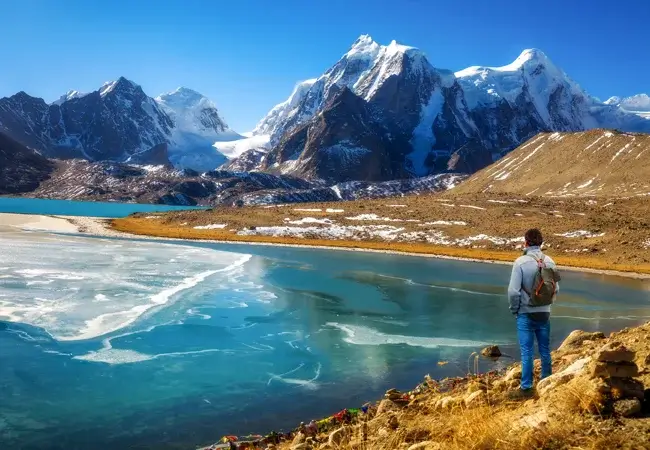
Named "Moon Lake" for its crescent shape, Chandratal is one of the most photographed lakes in India for good reason — the water is an impossible shade of turquoise-blue that shifts with the light. Accessible via a 1-km walk from the road. Camping near Chandratal is permitted and deeply popular in summer. Go at sunset or sunrise; midday crowds diminish the magic.
Dhankar Monastery & Lake
3,890 metres · Pin Valley, Spiti
Dhankar is the most dramatically positioned monastery in the region — clinging to a crumbling cliff 300 metres above the confluence of the Spiti and Pin Rivers. The old monastery is considered at risk from erosion, which adds a strange urgency to visiting it. A 45-minute trek above Dhankar leads to a small serene lake — one of the best viewpoints in all of Spiti.
Tabo Monastery
3,050 metres · Tabo Village, Spiti
Founded in 996 AD, Tabo is UNESCO-listed and often called the "Ajanta of the Himalayas." The mud-walled temples contain some of the finest and oldest surviving Buddhist murals anywhere on earth. The Dalai Lama has expressed a wish to retire here. There is a quietness to Tabo that settles into you without warning.
Langza Village
4,400 metres · Above Kaza
A small village famous for two extraordinary things: a giant golden Buddha statue overlooking the valley, and the fact that the ground here is littered with ammonite fossils — remnants of a seabed that existed millions of years ago when the Himalayas hadn't yet been pushed skyward. Children in Langza will show you fossils and sell them to you for ₹50. Both the history and the commerce are charming.
Hikkim — World's Highest Post Office
4,440 metres · Above Kaza
Hikkim Post Office is the highest in the world that still operates a full postal service . You can send a postcard from here to anywhere on earth. It will arrive. The postmaster has worked here for decades and has the quiet pride of someone who knows their job is unreasonably cool.
Komic Village
4,520 metres · Above Kaza
One of the highest road-accessible villages in Asia. Komic has a small monastery, a handful of stone houses, and a café that serves Maggi at the top of the world. The view from here — vast, bare, humbling — is what you came to Spiti for.
Pin Valley National Park
3,500–6,000 metres · Pin Valley, Spiti
One of the few places in the world where the snow leopard and the ibex share the same terrain. You're unlikely to see a snow leopard on a casual visit (they're famously invisible), but the drive into Pin Valley through narrow gorges and along the Pin River is extraordinary. The village of Mudh at the end of the driveable road is one of the most remote inhabited places you're likely to reach without a serious trek.
Kibber Village
4,270 metres · Above Kaza
A whitewashed village at the edge of a cliff, often cited as one of the highest inhabited villages in India. Most visitors combine it with a Key Monastery trip . The walk through the village is unhurried and quiet — the houses, the prayer wheels, the dogs sleeping in patches of afternoon sun — everything feels precisely placed.
Altitude Sickness in Spiti — What You Genuinely Need to Know
This is the section most travel blogs write two vague paragraphs about. We're going deeper because altitude sickness is the single biggest reason Spiti trips go wrong — and it is entirely preventable with the right knowledge.
Kaza sits at 3,800 metres. Chandratal is at 4,300 metres. Komic is at 4,520 metres. Kunzum Pass, which you cross on the Manali route, is 4,590 metres. At these elevations, the air contains significantly less oxygen than at sea level. Your body needs time to adapt — and most people don't give it enough.
Altitude Sickness Emergency Signs — Descend Immediately: Severe persistent headache that doesn't respond to paracetamol · Confusion or loss of coordination · Coughing up frothy or bloody fluid · Extreme breathlessness at rest · Lips or fingertips turning blue. These are signs of High Altitude Pulmonary Edema (HAPE) or Cerebral Edema (HACE) — both life-threatening. Descent is the only cure.
How to acclimatise properly
Start in Manali, not Kaza. Manali sits at 2,050 metres. Spend a minimum of one night here — two is better — before entering the valley . Your body begins adapting even at this altitude. Most people who get serious AMS in Spiti skipped this step.
The first day in Kaza is not a sightseeing day. Arrive, eat lightly, drink water, rest. A short evening walk around the town is fine. Key Monastery can wait until tomorrow when your lungs have had a night to adjust.
Hydration is non-negotiable. Drink 3–4 litres of water daily. Set a reminder if you have to. The dry mountain air causes dehydration faster than you realise, and dehydration worsens altitude symptoms significantly.
Diamox (Acetazolamide). This medication helps the kidneys regulate blood pH and speeds up the acclimatisation process. It doesn't eliminate AMS risk but significantly reduces it for most people. Standard dose is 125–250mg twice daily. Consult your doctor before travel — it's a prescription medication and has contraindications. Start 1–2 days before ascending.
Go slow on your first high-altitude excursions. When you visit Langza (4,400m) or Komic (4,520m), walk slowly. Sit down. Your ego will suggest moving faster; your lungs will disagree. Listen to your lungs.
Food & Accommodation in Spiti Valley
Where to stay in Spiti Valley
Kaza is the valley's main town and the most practical base. It has the widest range of accommodation — from basic guesthouses at ₹300/night to reasonably comfortable hotels at ₹1,500/night. Wi-Fi exists in some places but is unreliable; don't count on it.
Homestays are the accommodation highlight of Spiti. A Spitian family home — with low ceilings, thick stone walls, yak-dung fires in colder months, and a grandmother who communicates primarily through butter tea refills — is genuinely one of the great accommodation experiences in India. Langza , Kibber, and Tabo all have good homestay options at ₹300–600/night including dinner.
Camping near Chandratal is extremely popular in July and August. There are organised campsites with basic tents and meals. Book these in advance in peak season — good spots fill up weeks ahead. The experience of sleeping at 4,300 metres under a sky that has no light pollution other than the Milky Way is worth the cold.
What to eat in Spiti Valley
Spitian cuisine is high-calorie Tibetan-influenced mountain food — exactly what your body needs at altitude. Thukpa (noodle soup) is the Spiti staple. Hot, hearty, and arrives in a portion size that implies the cook has correctly guessed you've just spent four hours at 4,500 metres. Tsampa is roasted barley flour — the original Himalayan energy food , eaten with butter tea. Butter tea itself is an acquired taste: salty, buttery, and initially confusing to a palate expecting sweetness. Give it two cups before you decide.
Kaza has a few cafés that serve proper coffee, pasta, and pizza for the homesick. The food is reasonable. But if you're eating dal-chawal at a ₹80 plate dhaba run by a woman who has probably never left Spiti, you're having the better experience.
What to Pack for Spiti Valley — The Honest 2026 List
Clothing
- Thermal base layers (top & bottom)
- Fleece mid-layer — essential even in July
- Windproof outer jacket (waterproof is better)
- Warm hat and lightweight gloves
- Sunglasses (UV400 — the sun at 4,000m is brutal)
- Sturdy ankle-support trekking shoes
- Woollen socks — at least 4–5 pairs
- Comfortable loose trousers for long drives
Health & Safety
- Diamox (consult doctor before trip)
- Paracetamol and ibuprofen
- ORS sachets (rehydration salts)
- Basic first aid kit with bandages
- Sunscreen SPF 50+ (reapply every 2 hours)
- Lip balm with SPF — cracking lips hurt
- Antihistamine (dust is significant)
- Travel insurance documents (printed copy)
Tech & Practical
- BSNL SIM card (get in Manali or Shimla)
- Power bank — 10,000mAh minimum
- Offline maps downloaded (Google Maps + Maps.me)
- Headlamp or torch (power cuts happen)
- Cash — ideally ₹10,000+ in notes (ATMs scarce)
- Waterproof dry bag for valuables
- Camera with extra batteries (cold drains fast)
- Universal plug adapter + multi-port charger
Leave Behind
- Formal or heavy city clothes
- More than two pairs of shoes
- A laptop unless genuinely essential
- Drone without a permit (fines are real)
- Rigid plans with no buffer days
- Expectation of strong mobile data
- Large heavy luggage (soft bags are better)
- Any medication not cleared for altitude
Honest Tips from Spiti Travellers — Things No Guide Tells You
ATMs run out of cash. Often. The one ATM in Kaza (SBI) frequently runs dry during peak season. Carry enough cash from Manali or Shimla to last the entire trip. ₹10,000–15,000 in mixed notes is the safe benchmark.
The roads will destroy your phone battery. Constant vibration from the rough mountain roads activates your phone's display constantly. Airplane mode exists. Use it. Your power bank is not a luxury — it's infrastructure.
Spiti is not a destination for rushing. Every extra day you build into your schedule becomes a gift. A day you planned to use as buffer becomes the day you spend three hours at Dhankar Monastery doing nothing in particular. That nothing in particular will be one of your best travel memories.
The locals carry weight at altitudes that will humble you. A Spitian grandmother climbing a path at 4,200 metres with a load that would floor a fit 25-year-old is a common sight. Be humbled, not embarrassed. The altitude is doing its thing.
Travel responsibly. Spiti's ecosystem is extraordinarily fragile. Do not litter — especially near Chandratal and the high-altitude lakes where plastic waste has become a serious problem. Carry your waste out. Use the garbage bins where they exist. The "Last Shangri-La" needs your help to stay that way.
Do not skip the conversations. The most interesting things in Spiti are not sights — they're the conversations. The monk at Key who speaks impeccable English and has opinions about everything. The homestay host who used to be a mountaineer. The 17-year-old in Langza who wants to talk about football and mobile phones and wants to know what Mumbai looks like. Make time for these.
One last honest thing: Spiti will be uncomfortable in ways you don't expect — cold showers, thin oxygen, long bumpy roads, unreliable connectivity. These are not problems. They are the experience. Come ready to be inconvenienced and entirely won over at the same time.
Frequently Asked Questions About Spiti Valley
What is the best time to visit Spiti Valley in 2026?
The best time to visit Spiti Valley in 2026 is May through October, when both the Manali and Shimla routes are accessible. June to August is the warmest and most popular window. September and October offer the clearest skies and are preferred by photographers and experienced travellers who want fewer crowds. May has the advantage of early-season freshness with minimal tourists. The 2026 season has just opened as of late April.
How much does a 7-day budget trip to Spiti Valley cost in 2026?
A 7-day budget trip to Spiti Valley from Delhi costs approximately ₹10,800–17,000 per person on a tight budget (shared jeeps, guesthouses/homestays, local dhabas). A mid-range trip with private vehicle and better accommodation costs ₹27,000–45,000 per person. The biggest cost variable is local transport — a private vehicle is more expensive but strongly recommended for flexibility and safety.
How do you reach Spiti Valley from Delhi?
From Delhi, take an overnight Volvo bus or train to Manali (for the shorter Manali–Spiti route via Rohtang and Kunzum passes) or to Shimla (for the longer Shimla–Kinnaur–Spiti route). From Manali , Kaza is around 8–10 hours by road. From Shimla, it's 12–15 hours spread across 2 days. There is no train or direct flight to Spiti — all final approach is by road.
Do Indians need a permit to visit Spiti Valley?
No, Indian nationals do not require any special permit to visit Spiti Valley, including Kaza, Key Monastery, Kibber, Langza, Hikkim, Komic, Tabo, and Pin Valley. Foreign nationals require an Inner Line Permit (ILP) for certain restricted areas near the China border. ILPs can be obtained from the District Magistrate's office in Kaza or Recong Peo.
Is Spiti Valley safe for solo women travellers?
Yes, Spiti Valley is considered among the safest destinations in India for solo women travellers. The local Spitian communities are known for their welcoming, respectful nature. Homestays in Spiti are particularly recommended for solo women — the family environment is safe, warm, and provides good local insight. The primary risks — altitude and road conditions — affect all travellers equally. Standard travel safety practices apply.
Is there mobile network and internet in Spiti Valley?
BSNL is the only reliable network in Spiti Valley. Get a BSNL SIM card in Manali or Shimla before entering the valley. Jio and Airtel work in Kaza and a few larger villages but are absent on mountain roads. Wi-Fi exists in some guesthouses in Kaza but is slow and unreliable. Download offline maps (Google Maps or Maps.me) and key information before entering the valley.
What are the top places to visit in Spiti Valley?
The top places to visit in Spiti Valley are: Key Monastery (the largest monastery in Spiti at 4,166m), Chandratal Lake (a stunning crescent-shaped lake at 4,300m), Dhankar Monastery (dramatically perched on a clifftop above the Spiti River), Tabo Monastery (with 1,000-year-old murals, UNESCO-listed), Langza village (fossils and views), Hikkim (world's highest post office at 4,440m), Komic (one of the highest road-accessible villages in Asia at 4,520m), Pin Valley National Park, and Kibber village.